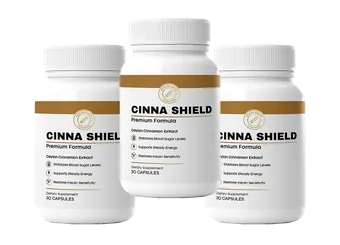
- 3 bottles delivered — 90 capsules, three months
- Free U.S. shipping, 3–5 business days
- One-time purchase, no auto-ship
- 90-day money-back guarantee — even on an empty bottle
- Save $138 vs. 3 single bottles at $79 each
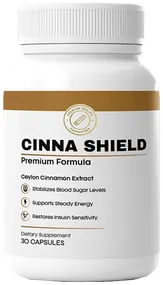
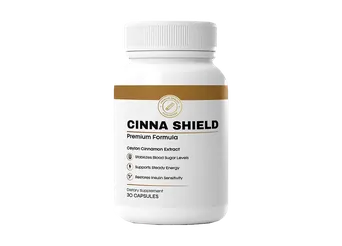
If cinnamon never did anything for you, you probably took Cassia — the species in most cinnamon sold in North America. CinnaShield is DNA-verified Ceylon from Sri Lanka, concentrated 12:1: one capsule, the equivalent of 7,200 mg of bark. It supports healthy blood sugar levels and insulin sensitivity, as part of a balanced routine.* 90 days to decide, or every dollar back.
Get CinnaShield — from $33 a bottle, 90-day guarantee*These statements have not been evaluated by the Food and Drug Administration. This product is not intended to diagnose, treat, cure or prevent any disease.


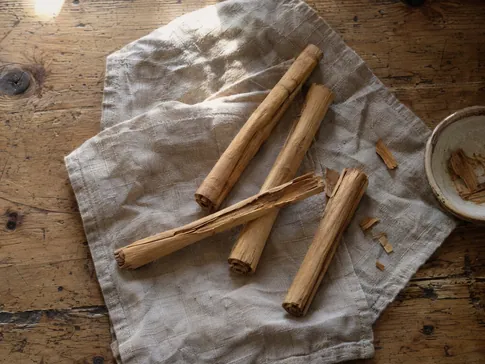
Two different trees share one name on the shelf. Cassia (Cinnamomum cassia) is the thick, cheap bark that the National Institutes of Health calls the most common type sold in North America. Ceylon (Cinnamomum verum — literally "true cinnamon") is a different species, grown mainly in Sri Lanka, with a different chemistry and a fraction of the coumarin. The label does not have to tell you which one you bought. So if the jar in your cabinet or the capsule from the drugstore never did anything for you, the honest explanation is not that cinnamon is a myth. It is that you probably never took Ceylon, and almost certainly never took enough of it. CinnaShield fixes both: the species is confirmed by DNA testing of the raw material, and the extract is concentrated 12:1.


Go look at the jar in your cabinet. If it does not say Ceylon or Cinnamomum verum, assume it is Cassia — that is what most cinnamon sold here is. Now look at a drugstore cinnamon capsule: it tells you the weight of powder inside and, usually, nothing about the species. CinnaShield tells you both: DNA-verified Ceylon, concentrated 12:1, the equivalent of 7,200 mg of bark in one capsule. That is the difference between a seasoning and a supplement.
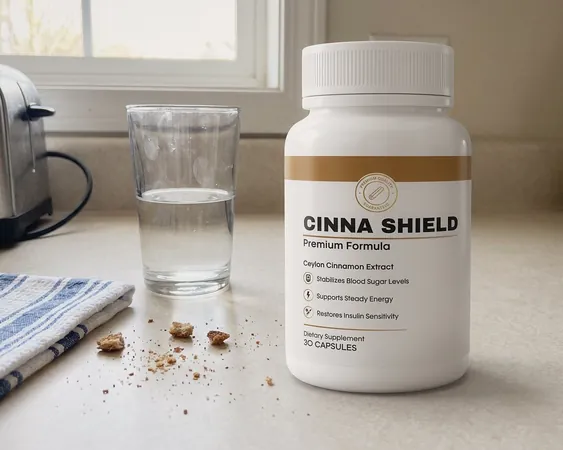
See what's insideOne capsule, once a day, with a glass of water, next to a meal you already eat. No powder to measure, no spoonful in the coffee. You have 90 days to decide whether it earned its place, and the guarantee covers an empty bottle — so the only way to lose is to never try it. It is not a replacement for balanced meals, movement, sleep, or anything your doctor has prescribed.
Choose a bundle
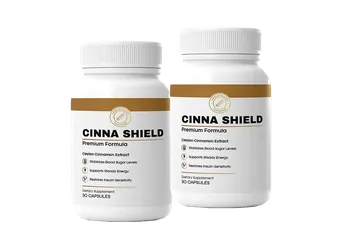
Every bundle is the same CinnaShield, the same 30-capsule bottle and the same 90-day guarantee. One bottle lasts 30 days at one capsule a day. What changes is what you pay per bottle: $79 for one, $44.50 each for two, $33 each for three. Three bottles cost $99 — $138 less than buying them one at a time — and give you three months to find out, with every one of those bottles covered by the same 90 days. If you are going to try Ceylon properly, this is the way to try it.
Your CinnaShield bundle pricing is held for
These CinnaShield bundle prices stay as shown while the timer runs.
CinnaShield bundle pricing on this page is held for 30 minutes from the moment you arrive. The countdown is a visual aid; the prices below are the ones that apply.


You should not have to figure out a new routine alone, and you should never have to fight for a refund. Every order comes with a support team at support@cinnashield.com that answers every message — about orders, shipping, tracking and the guarantee. If CinnaShield has not earned its place, one e-mail with your order number starts the refund — we confirm it, you mail the bottles back, even empty, and the money comes back. We do not give medical or dosage advice; that conversation belongs with your doctor.

Species: a typical cinnamon capsule does not have to say which plant is inside, and most cinnamon sold in North America is Cassia. CinnaShield is Ceylon (Cinnamomum verum), and the raw material is DNA-tested to prove it.
Concentration: a capsule of ground bark gives you ground bark. CinnaShield is a 12:1 extract — twelve kilograms of bark into one kilogram of extract — so one capsule carries the equivalent of 7,200 mg of raw bark, an amount you could not eat as powder every day.
What is kept out: Cassia, and with it most of the coumarin.
Where it is made: an FDA-registered facility that is GMP-certified. Facility registration is not FDA approval of the product — no supplement has that — but it does mean the place it is made is on record. Read the label on any cinnamon capsule you already own and ask it those three questions. Then read ours.

CinnaShield has a short ingredient line: a 12:1 extract of Ceylon cinnamon bark, and MCT oil to carry it, inside a capsule. Below is what each one is, where it comes from, what the published research actually shows — and the one ingredient we deliberately refuse to use. Read the label on your bottle before you start; it is the authoritative list and it states the amounts.

For about ten years, researchers at the U.S. Department of Agriculture searched for natural compounds that could help maintain normal blood sugar levels. They tested scores of plant extracts. None came close to one of them: cinnamon. So they went into the bark itself, tested its components one by one, and isolated a group of water-soluble polyphenol polymers. In test-tube assays on fat cells, those compounds increased sugar metabolism twentyfold, working — in the researchers' words — by activating the enzymes that stimulate insulin receptors while inhibiting the ones that switch them off. The work was published in 2004 in the Journal of Agricultural and Food Chemistry.
The same researchers added a warning most cinnamon sellers skip: table cinnamon also contains fat-soluble compounds that may accumulate in the body if you eat it as more than a spice over long periods. In plain words, a spoonful in your coffee every morning is not the answer.
That is why CinnaShield is an extract in a capsule, not a jar: DNA-verified Ceylon, concentrated 12:1, the equivalent of 7,200 mg of raw bark in one capsule. It supports healthy blood sugar levels and insulin sensitivity, as part of a balanced routine.* What the research does not show: those were laboratory results on cinnamon compounds, not a study of people taking CinnaShield, and the National Institutes of Health describes the human evidence on cinnamon supplements as unclear. We tell you that because the alternative is pretending — and because the 90-day guarantee exists precisely so you do not have to take our word for it.

MCT stands for medium-chain triglycerides, a fat usually taken from coconut or palm kernel oil. In CinnaShield it is the carrier — the oil that holds the extract inside the capsule. It is the second of the two ingredients named on the label, and it is not an active.
Cassia (Cinnamomum cassia) is the thicker, cheaper bark that the National Institutes of Health describes as the most common type of cinnamon sold in North America. It is a different species from Ceylon, and it carries far more coumarin — a natural compound that can harm the liver at sustained high intakes. That is not our opinion; it is why European food-safety regulators set a tolerable daily intake of 0.1 mg of coumarin per kilogram of body weight in 2004, and why Germany's federal risk institute advises people who use cinnamon regularly to choose Ceylon, which contains only small amounts. Now think about what "regularly" means for someone who has been putting cinnamon in their coffee every morning, or swallowing a Cassia capsule every day, for years, in the belief that they were doing something good.
Go check the label in your cabinet. If it does not say Ceylon, it almost certainly is not. CinnaShield uses no Cassia — and the DNA test exists because, once the bark is ground, nobody can tell the two apart by looking.
One capsule is one serving, 30 to a bottle. The capsule shell and any other inactive ingredients are listed on the label. The label on the bottle is the authoritative list; if it and this page ever disagree, the label wins.
On the sources above: the cinnamon research comes from the U.S. Department of Agriculture's Agricultural Research Service (ARS news, 19 April 2004 and Agricultural Research magazine, April 2004; lead researcher Richard A. Anderson, Beltsville Human Nutrition Research Center; published in the Journal of Agricultural and Food Chemistry, 2004). It describes compounds isolated from cinnamon bark in laboratory assays — not CinnaShield, and not an outcome in people who take this product. The coumarin intake limit is from the European Food Safety Authority (2004), as reported by Germany's Federal Institute for Risk Assessment (BfR Opinion 048/2007), which is also the source of the advice to prefer Ceylon. The statements about which cinnamon is most sold in North America, about side effects and about pregnancy are from the National Center for Complementary and Integrative Health. The 12:1 concentration, the 7,200 mg bark equivalent, the DNA verification and the statements marked with an asterisk are our own statements about our product and have not been evaluated by the FDA.
Any cinnamon page that tells you what will happen by week two is guessing, and you have probably been burned by that guess before. We do not publish a timeline, because nobody honestly can: how a supplement fits a person depends on diet, sleep, activity, medication and things nobody has fully mapped. What we do instead is remove the risk entirely. Take CinnaShield for up to 90 days. If it has not earned its place, e-mail us, mail the bottles back once we confirm — empty ones included — and the purchase price comes back.

The questions people ask before they order
One capsule, once a day, with a glass of water. That is the whole routine. Follow the directions printed on your bottle — they are the ones that apply — and attach the capsule to a moment you already repeat every day so it becomes automatic. Do not take more than the label directs; a higher dose is not a faster result, and the 12:1 concentration is the whole point of one capsule.
Each bottle holds 30 capsules. At one a day, that is 30 days. That is why the bundles are sized the way they are: one bottle is a month, two bottles two, three bottles three. The three-bottle bundle is also the one with the lowest price per bottle — $33 each, against $79 for a single bottle — and it is the one that gives you the full 90-day window with product in hand the entire time.
Orders are processed within 1–2 business days and ship free to U.S. addresses via UPS, arriving in 3–5 business days, with a tracking number by e-mail when it leaves our fulfilment centre. The full details are on the shipping page.
We cannot answer that, and neither can any web page. CinnaShield is a dietary supplement, not a medicine, and nothing here is medical advice. If you take any medication for blood sugar — tablets or insulin — talk to the doctor who prescribed it before adding CinnaShield, and do not change a dose on your own. The same applies if you are pregnant or nursing, under 18, taking any other prescription medication or managing a diagnosed condition. They know your history; we do not.
Then you get your money back, and we mean it the way you hope we mean it. There is a 90-day money-back guarantee on every bundle, and it applies whether the bottles are sealed, opened or empty. E-mail support@cinnashield.com with your order number and ask for the refund; the support team handles it from there — no forms, no arguing about what you "did wrong". The 90 days count from your order date, all bottles need to be mailed back — sealed, opened or empty — you cover the return postage, and the refund typically lands in 5–10 business days. The full steps are on the refund policy page.
No. CinnaShield is a dietary supplement, not a medicine, and it is not a substitute for any medication, for insulin, or for the monitoring your doctor has asked you to do. Anyone selling you a supplement as a way to "get off" a prescription is making a comparison the product cannot support. If you are considering changing or stopping a prescription, that is a conversation with the doctor who prescribed it — not with a bottle.
Cinnamon in food amounts is eaten every day around the world. In supplement amounts, the National Institutes of Health notes that the most commonly reported issues are digestive upset and, rarely, allergic reaction, that cinnamon may interact with some medicines, and that larger amounts of Ceylon cinnamon during pregnancy are considered unsafe — so if you are pregnant or nursing, this is not for you without your doctor's say-so. CinnaShield uses Ceylon, which contains only small amounts of coumarin, the compound behind the liver concern with Cassia. It is not for anyone with a known allergy to cinnamon. If you have a medical condition or take medication — especially for blood sugar — talk to your doctor before use. Stop use and speak to a healthcare professional if you have a reaction. The label lists every ingredient; if it and this page ever disagree, the label wins.
Yes. CinnaShield is a supplement to a routine, not a replacement for one, and it is meant to sit alongside reasonable eating, normal activity and sleep rather than instead of them. Any product telling you it works no matter what you eat or do is making a claim the Federal Trade Commission treats as false on its face — and you have probably bought one of those before.
We do not publish a timeline, because nobody honestly can — and if you have been promised "results in 7 days" by a cinnamon product before, you already know how that ended. Individual response depends on diet, activity, sleep, medication and factors nobody has fully mapped, and no supplement has a predictable, guaranteed result. What we can tell you is what is in the capsule, which species it is, how concentrated it is, how to take it — and that you have 90 days to decide, with an empty bottle still counting for a full refund.
No. CinnaShield is sold only through the official checkout linked on this page, which is how we handle the 90-day guarantee. Listings on Amazon, Walmart or anywhere else are not authorized, and a purchase made there is not covered.
Still have a question? See shipping and delivery, the refund policy, or contact us directly.
Three bottles at $33 each or one at $79 — sealed, opened or empty, a full refund within 90 days.
Your CinnaShield bundle pricing is held for
These CinnaShield bundle prices stay as shown while the timer runs.
CinnaShield bundle pricing on this page is held for 30 minutes from the moment you arrive. The countdown is a visual aid; the prices below are the ones that apply.


CinnaShield is covered by a 90-day money-back guarantee on every bundle: ask for a full refund of the purchase price within 90 days, whether the bottles are sealed, opened or empty — one e-mail to support@cinnashield.com with your order number is how it starts, and nobody will ask you to justify it. We can afford to say that because we know which plant is in the capsule and how concentrated it is; a seller who cannot tell you the species cannot afford this guarantee. The 90 days count from your order date, the bottles are mailed back to us, you cover the return postage, and the refund typically lands in 5–10 business days. The exact steps are set out in full on our refund policy page.